
The Next Wave of Immune Cell Therapy
From CAR T to eTCR: New immune cell therapies push beyond blood cancers
Patient number 4.
That is the label bestowed on Kevin Tronkowski, a 56-year-old software engineer and former soccer coach from New Hampshire, who took a leap of faith last April when he joined a trailblazing group of patients in a phase 1 clinical trial of a novel immune cell therapy.
Tronkowski, who was diagnosed with colorectal cancer in 2015, was the fourth patient enrolled at Dana-Farber to test an experimental therapy — a new kind of cell-based treatment known as engineered T-cell receptor (eTCR) T cells, designed to target and kill cancer cells. The T cells, a type of white blood cell, are first isolated from the patient's blood, then genetically rewired in the laboratory to seek and destroy tumors that carry a particular gene mutation, and finally returned to the body to fulfill their mission. Only those patients whose tumors carry a specific genetic change (known as R175H in the gene TP53) and have a specific immune protein profile (called HLA-A*02:01) are eligible for the trial.
"I was very fortunate to qualify, and at the same time, I knew it was going to be tough because of the nature of the therapy," said Tronkowski. "But there was no question that I was going to participate if I qualified. From the time of my diagnosis, I knew that I was going to commit to doing hard things to battle this disease."

Dana-Farber reseachers working on TCR T-cell therapies.
Tronkowski's treatment is part of a vanguard of new immunotherapies now under development, which harness the immune system in a highly targeted and often personalized way to mount a powerful, precise attack against tumors. This burgeoning field has been catalyzed by the successes of first-generation CAR T cells, which were first approved for commercial use in 2017 and are now standard treatments for certain blood cancers, such as leukemia, lymphoma, and multiple myeloma, yielding remarkable responses in a subset of patients.
The new therapies are potent and promising. But with that power and precision come some risks. Like the handful of FDA-approved CAR T cell therapies, many of the novel immune treatments now being developed — including Tronkowski's — require chemotherapy to help create a better environment for expansion and activation of the modified cells within the body following infusion, and in certain instances, other medicines to rev up both the native and newly infused immune cells. And, because these treatments interact with a juggernaut like the immune system, they can cause side effects, sometimes severe ones.
Both eTCR T cells and CAR T cells are also engineered in the laboratory, but the cellular therapies differ in precisely how they are molecularly rewired to attack cancers. (Broadly speaking, CAR T cells make use of a synthetic chimeric antigen receptor or CAR; eTCR T cells harness an engineered T-cell receptor, or TCR, that mirrors what native T cells use). Buoyed by the early success against blood cancer targets, scientists are now exploring these cellular therapies for several solid tumor cancers, including colorectal cancer.
From CAR T to eTCR T Cells
After Tronkowski was first diagnosed in 2015, his initial course of standard treatment and follow-up were deemed successful, and he appeared to be disease-free. But in early 2024, the difficult news came that his cancer had returned and spread to his liver and lungs. For a while, chemotherapy was able to hold the disease at bay, but the regimen was taking a significant toll on his body; a milder formula proved ineffective.
That’s when his clinical team at Dana-Farber, led by Benjamin Schlechter, MD, a medical oncologist in Dana-Farber's Gastrointestinal Cancer Treatment Center and co-director of the Colon and Rectal Cancer Center, told him about a clinical trial of eTCR T cells led by Dana-Farber's Rishi Surana, MD, PhD. Schlechter, Surana, and their colleagues, together with Dana-Farber’s Immune Effector Cell Therapy Program, are among a cadre of cancer physicians and investigators at Dana-Farber and elsewhere who are working to apply immune cell therapies to solid tumors.
T cells patrol the body, scouting out infectious agents or abnormal cells, using a group of proteins on their surfaces called T-cell receptors (TCRs), which recognize specific molecular targets. A key distinction between CAR T cells and eTCR T cells lies in the kinds of cancer-related targets they recognize and how similar the engineered CAR and TCR proteins are to typical immune signaling pathways. CAR T cells recognize targets on the surface of cancer cells and are artificially designed to react strongly when a target is present. In contrast, eTCR T cells can find targets both outside and inside cells — including those associated with cancer-causing gene mutations — and expand in a much more immunologically "normal" way, potentially reducing their toxicity.
"As someone who is very technical and science-focused, it was really eye-opening to me to see the amazing progress that's been made in cancer treatment," said Tronkowski. "It's like science fiction — but real. It’s truly amazing."

Caron Jacobson, MD, MMSc
The advances that so impressed Tronkowski have been years in the making, and Dana-Farber clinicians and investigators are among the key drivers. For example, Caron Jacobson, MD, MMSc, medical director of Dana-Farber’s Immune Effector Cell Therapy Program, and her colleagues participated in and led several pivotal studies that supported the clinical approval of the current batch of CAR T cells prescribed for blood cancers, including the ZUMA-1 and ZUMA-5 trials of axi-cel (short for axicabtagene ciloleucel) for large B-cell lymphoma and follicular lymphoma respectively, and the ZUMA-2 trial of brexu-cel (short for brexucabtagene autoleucel) for mantle cell lymphoma.
More recently, Jacobson and her neuro-oncology colleague Lakshmi Nayak, MD, led an investigator-initiated trial of axi-cel in central nervous system lymphoma (CNSL) — a form of the disease that was initially excluded from the FDA label. Now, based on the trial results, the FDA has revised its label, giving patients with CNSL access to one of the most effective therapies available for their cancer.
Indeed, axi-cel, brexu-cel, and other CAR T cell therapies can yield remarkable results for some patients, leading to long-term disease control that lasts years — possibly even a decade or more — and, in many cases, represent cures.

Sarah Nikiforow, MD, PhD
"It's pretty mind-blowing when you look back at those early days," said Sarah Nikiforow, MD, PhD, technical director of the Immune Effector Cell Therapy Program and medical director of Dana-Farber's Connell and O'Reilly Families Cell Manipulation Core Facility (CMCF). Thirteen years ago, she led a Dana-Farber-initiated phase 1 trial evaluating the use of CAR T cells in adults with acute myelogenous leukemia and multiple myeloma. The trial was both the first CAR T trial at Dana-Farber and the first to have CAR T cells manufactured in the CMCF. At the time, the process of isolating and growing the cells was slow and done mostly by hand.
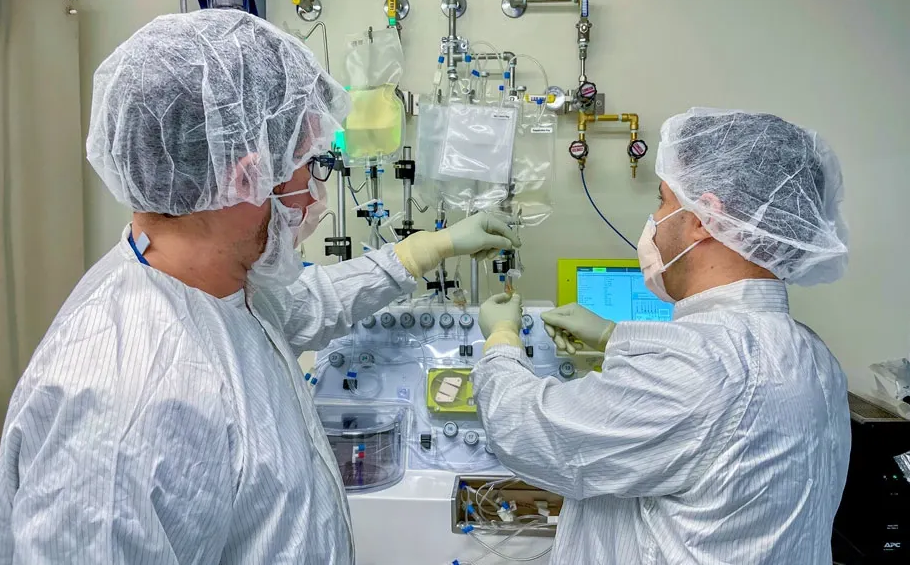
Now, Nikiforow and her CMCF colleagues facilitate the administration of almost 700 cell therapy products each year that are manufactured by commercial entities. In addition, they use closed, semi-automated machines powered by advanced software programs to manufacture CAR T cells and other genetically modified products on site. These new machines and workflows not only minimize the risk of contamination but also ensure that cell therapies are manufactured in a reliable, consistent way within about eight days.
CAR T-Cell Manufacturing
There have also been efforts to shorten the period needed between initial collection, cell manufacturing, and infusion — known as vein-to-vein time.
"That doesn't sound like a sexy research endeavor, but it's still hugely impactful because we know that patients who get their cells back faster do better," said Nikiforow. Depending on the type of therapy, vein-to-vein time can last from 10 days to a month or more.
In addition, investigators have learned that when cells spend less time outside the body, they are more potent, therefore requiring fewer cells at the time of infusion. That means the cells' biology — and ultimately the treatment itself — can also be improved with shorter manufacturing times. Both academic and commercial entities are identifying novel manufacturing approaches and assessing how these changes impact the CAR T cells in the final product and the patient.
Importantly, there have also been fundamental steps forward in managing the side effects that can emerge with immune cell therapy.

"We have learned that we can be more aggressive in treating side effects when they occur and not worry about losing efficacy," Jacobson said. "As a result, we’re able to treat more patients with less toxicity, which has allowed us to use the first-generation CAR T cell products now in an outpatient setting. That has been a real benefit for patients."
Even with these steps forward, researchers are setting their sights on a future that invokes the science fiction Tronkowski spoke of, in which bespoke immune cell therapies can be made even more simply — namely, inside patients' bodies rather than inside of a laboratory.
"The idea is that if we can engineer these cells directly within patients, removing the need for immune cell collection, conditioning chemotherapy, and time for T cell manufacturing, that is going to enhance access," said Eric Smith, MD, PhD, director of translational research in Dana-Farber's Immune Effector Cell Therapy Program. Smith's team and others are working on this so-called direct in vivo approach.
Researchers are now developing methods to deliver the key components of the engineered CAR T cells — including the CAR — to patients' T cells within the body. That requires a suitable delivery vehicle, such as a modified virus (known as a lentivirus) or a lipid nanoparticle. Already, the field is seeing some promising results.
"So far, there are just two reports of a small number of patients each using the direct in vivo approach for multiple myeloma," Smith said. "We haven't seen durability data yet, but patients have had very deep responses to these early attempts, which is very encouraging for the field."
The CAR T Targeting Problem
Despite the remarkable strides that have been made over the last decade in immune cell therapy, one key area is proving more complex than researchers imagined: solid tumors.
To mount an effective immune response, CAR T cells and other engineered immune therapies require a defined molecular target: ideally, a protein or other factor that is present exclusively on cancer cells and not normal ones.
Identifying that unique target — especially in solid tumors, like colorectal, breast, brain, pancreatic, and other cancers — is a challenging task.
"It's a giant problem," said Robbie Majzner, MD, director of the Pediatric and Young Adult Cancer Cell Therapy Program at Dana-Farber/Boston Children's Cancer and Blood Disorders Center. "CAR T cells don’t know when something is normal or cancer, they just go after their target."

Researchers are studying new ways to harness the immune system to fight cancer.
In other words, CAR T cells have a single lens. As traditionally designed, they are programmed to attack any cell expressing a specific target. If normal tissues and their malignant counterparts share the same biological origins, they can appear nearly indistinguishable when viewed through this molecular lens. Thus, CAR T cells will kill not only tumor cells, but also vital tissues expressing the same target, resulting in severe toxicity.
"In certain blood cancers, this is generally tolerable. It is not ideal, but you can live without certain classes of blood cells, such as B cells,” said Majzner. “That’s in part why CAR T cells have worked so well in blood cancers. But if you are treating liver cancer and you go after a target that says, ‘I’m a liver cell,’ you’re going to wipe out the entire liver.” This targeting conundrum has stymied progress in the field.
"I think the failures of the past 10 years in solid tumors were the mistake of just taking a lymphoma idea and applying it to solid tumors unmodified," said Schlechter. "That wasn't sophisticated enough."
But Dana-Farber investigators, including Schlechter, Majzner, and others, are now charting a path forward, guided by a deeper understanding of tumor biology, potential cancer-specific targets, and ways to augment the biological circuitry of T cells so they are not inactivated by the tumor's surroundings — an often-used trick, particularly by solid tumors, to disarm the immune system.
Logic-Gated CAR T Cells
One promising approach is to identify multiple targets — on tumor cells and normal cells — and use a combinatorial, logic-based system that activates the CAR T cell only when a certain combination of targets is present. For example, if target A is present on normal and cancer cells, and target B is present on cancer cells, the CAR T cell would only turn on in the presence of A and B. Majzner's laboratory recently introduced a completely new system that allows for this logic-gating in CAR T cells. By delving into the basic biology of T cell signaling, his group showed that they could completely redesign CAR T cell functionality to allow this more complex targeting, which could enable success in solid tumors.
"The idea is that it doesn't have to be a simple 'you have it or don't type thing, but to use combinatorial approaches to more precisely target tumor cells," said Schlechter. He and his colleagues are working in the lab to design logic-gated CAR T cells that will effectively target gastrointestinal tumors.
Majzner's team hopes to leverage combinatorial approaches to treat pediatric brain tumors. He and his colleagues are focused not on protein targets but on sugar molecules that sit on the cell surface. "Remarkably, these are some of the oldest targets ever known to be on cancer cells," he said.
Early Clinical Results
As Dana-Farber investigators work to improve the design of CAR T cells and other immune cell therapies to effectively target solid tumors, encouraging results in the clinic are emerging.
Tronkowski underwent treatment with the experimental eTCR T cell therapy (also known as NT-175) last spring. Thanks in part to the dedication and coordination of his clinical team, including the clinical trial nurses and Schlechter's administrative staff, he was able to see his daughter graduate from college.
"We squeezed it in, just as Dr. Schlechter said we would," said Tronkowski. "He told me, 'You won't feel great, but you’ll be there.’”
Initially, the treatment was able to halt tumor growth throughout his body; the results from his scans were looking good and he was feeling great. But about six months in, some of the tumors resurged.
"The good news here is that they were only slipping in the liver, so I'm currently getting radiation there," Tronkowski said. "This may not be a cure, but it did turn the tables — it changed the disease and gave me more options."
Schlechter added, “Chemotherapy will never be able to cure Kevin. We still don't know if immune therapy can, but he's been able to live chemotherapy-free because of this treatment. And that’s really important."
Despite the twists and turns of his cancer journey, Tronkowski remains hopeful — and grateful. "I felt it was a privilege to participate in this trial — and in a strange way, kind of a blessing," he said. "In some small way, I made a difference."
NK Cell Therapy and Personalized Cancer Vaccines
While Dana-Farber researchers are working to bring the power of engineered T cell therapies to solid tumors, other immune-based modalities are also showing promise. These include a form of immune cell therapy built from the body's natural killer cells, or NK cells.
As their name implies, NK cells are intrinsically programmed to kill tumor cells.
"Over the last two decades, people have been very interested in using NK cells for immunotherapy and that’s in part because of their safety profile," said Rizwan Romee, MD, medical oncologist and director of the Haploidentical Donor Transplantation Program at Dana-Farber. "For example, if you are given NK cells derived from another person, they won't react against and kill the healthy cells in your body."

Rizwan Romee, MD
That means NK cells don't pose the same risks and challenges as engineered T cells, such as CAR T cells and eTCR T cells. But there are some downsides: NK cells only live for a week or two within the body, so their effects are not long-lived. In addition, NK cells are subject to the same type of immune rejection that other transplanted cells and tissues undergo. Therefore, to be used therapeutically, the cells must be engineered using patient-derived cells or molecularly "cloaked" so they can evade immune detection.
Romee and his colleagues are developing ways to molecularly rewire NK cells to overcome these limitations. The researchers also have several clinical trials currently underway at Dana-Farber to test the efficacy of engineered NK cells in different cancers, including acute myelogenous leukemia, kidney cancer, bladder cancer, and ovarian cancer.
"We aren't yet at a point where we can say, ‘In this case, NK cells are better than T cells in a given type of cancer,’” said Romee. “In terms of where we stand right now, I think it's an open field."
Another type of immune therapy that is gaining momentum is personalized cancer vaccines. While not made from immune cells per se, these therapies are highly customized and tailored to the unique genetic makeup of patients' tumors, issuing a targeted wake-up call to the immune system to attack cancer cells.
"The concept of cancer vaccines has been around for more than 50 years, but targeting them specifically against personal tumor mutations only became possible with the advent of modern genomics," said Patrick Ott, MD, PhD, clinical director of Dana-Farber’s Melanoma Treatment Center. "It's been over just the last 10 years or so that we've seen the key proof points that suggest, yes, we can do this, these therapies are safe, and the immune responses to them are great."
Using genetic readouts from patients’ tumors and matched blood samples, Ott and his colleagues deploy sophisticated computer algorithms to determine which genetic mutations should be incorporated into the design of the cancer vaccine.

Patrick Ott, MD, PhD, and Catherine Wu, MD
"At the end of the day, you go from maybe 500 potential mutation targets to 20, and then those 20 are what go into the vaccine," explained Ott.
The entire process of vaccine design and manufacturing can take anywhere from six to 12 weeks, which is one of the major challenges of the approach. “Because it is custom made, it may not be immediately available when a patient needs it,” said Ott.
Ott and his colleagues, including Catherine Wu, MD, chief of Stem Cell Transplantation and Cellular Therapies at Dana-Farber, have pioneered this approach through the development of NeoVax, a personalized cancer vaccine that has been tested in a number of early-stage clinical trials across various cancer types, including melanoma, glioblastoma, renal cell carcinoma, ovarian cancer, follicular lymphoma, and chronic lymphocytic leukemia.
While Ott believes cancer vaccines hold remarkable potential, the field is holding its collective breath in anticipation of the results of an international, phase 3, randomized study. This effort, which evaluates a personalized cancer vaccine known as intismeran autogene in patients with high-risk melanoma, is the largest of its kind and most advanced to date.
"As a field, we really need an FDA-approved drug to help fuel continued discovery and development."
By Nicole Davis, PhD